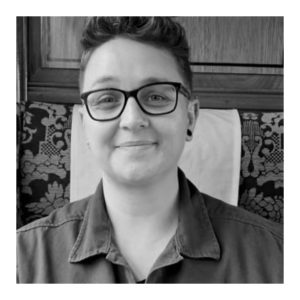
 Growing up neurodivergent, AFAB and queer, guest therapist Heather Oglesby explores the lasting impact of socialisation, masking and marginalisation. Blending personal experience with wider insight, this piece highlights intersecting identities, the toll of invisibility, and the liberating power of self-understanding, authenticity and embracing neuroqueer identity and joy.
It’s often a cliché when a teenager says they don’t fit in anywhere that it’s down to the developing mind, and that they will eventually find their way and who they are. This is often the case, but no one has any more to say when that feeling persists into adulthood. You may have worked out some parts of yourself but that persistent feeling of something else being “off” lingers.
AFAB (assigned female at birth) people have been chronically overlooked when it comes to neurodivergence because of the way they are socialised as children. They are made to make themselves small, to give and maintain eye contact, to wait their turn, be polite, not interrupt. They are labelled as ‘chatty cathys’, and as dramatic or hysterical when they show any big emotion. This can be distressing in itself, but if that AFAB person is also queer or trans* it adds extra layers to the feeling of already being othered by their peers. This can include things like being teased for not joining in on conversations about who has a crush on which boy, or excitement about going shopping for your first bra. You begin to feel increasingly isolated and ask questions of yourself such as:
- “Why am I such a freak?”
- “Why can’t I just be like everyone else?”
- “Why is it so difficult for me?”
- “Am I the problem?”
These damaging thoughts can evolve into depression and anxiety, and lead to self-harm and suicidal ideation.
Mortality and threats
A large study published in 2015 (Dalsgaard et al.) titled “Mortality in children, adolescents, and adults with attention deficit hyperactivity disorder: a nationwide cohort study” found that the mortality rate in females with ADHD was higher than in males with ADHD. The study did not touch on whether any of the participants were not cisgender, so we can only assume they were going on ASAB (assigned sex at birth).
Moving through life as a queer, gender-fluid neurodivergent person hasn’t always been the easiest. Constantly having to be on extra alert when somewhere new, not just scanning the environment and people to check they aren’t a threat when walking hand in hand with my partner, but also having to work hard to calm my thoughts that are travelling at lightning speed and temper my sensory overload.
I have always been slightly stubborn and with my white privilege have stood up to discrimination both aimed at me and others, but it is exhausting. Speaking to other queer and trans* neurodivergent people the consensus is usually the same: many of us we are tired; we just want to be able to live our lives without the ever-present threat of hate crimes or having our rights being taken away. As well as the discrimination against people’s sexual orientation and gender identity there is also discrimination against neurodivergent people – things like:
- being passed over for a promotion at work in favour of a neurotypical colleague
- the looks on people’s faces and sometimes insults when you are stimming in public
- a teacher making you read out loud to the class constantly when they know you find it intensely difficult
- not providing time for note-taking or giving written instructions; countless performance reviews …
The list goes on.
Authenticity
Because many LGBTQ+ people have had to do the hard work of understanding who we are and why we feel different from our peers from a very young age, we have a wider scope of acceptance of things that challenge societal norms and neurotypical expectations. We celebrate the intricacies that make us unique and moments of self-love, queer joy, gender euphoria.
The relief of not having to mask is akin to coming out:
I will no longer censor myself for the comfort of neurotypical/heterosexual/cisgender people, with some LGBTQ+ neurodivergent people even identifying as neuroqueer, a blending of both identities.
Reference
Dalsgaard, S., Østergaard, S., Leckman, J. et al. (2015) “Mortality in children, adolescents, and adults with attention deficit hyperactivity disorder: a nationwide cohort study.” The Lancet, 385, 2190–2196. Available at: www.thelancet.com/journals/lancet/article/PIIS0140-6736(14)61684-6/abstract
Click the link if you'd like to visit Heather's therapy website
Published 6 May 2026
All rights reserved © Copyright Heather Oglesby 2026. Unauthorised use and/or duplication of this material without express and written permission from the author of this post is strictly prohibited. Author contact via website Contact page.
Website version and image © Copyright Attention Allies 2026.